
Do you recall your last, really bad anxiety attack? That feeling of being swallowed up by a huge wave and trying to gasp for air, but it just wouldn’t come through?
If the answer is yes, then pop the kettle on, get comfy, and join me for the latest episode of Head Trash & Healing Show.
Today my guest is Dr Lauren Cook. You might know her as the author of the seriously helpful book, “Generation Anxiety“. This lady has got it all figured out when it comes to anxiety and shares tons of brilliant tips for dealing with anxiety.
In this episode, we chat about Lauren’s own experience as a new mum who grappled with an unexpected phobia of vomit. We’re really getting into the nitty-gritty here. It’s terrifying, the concept of experiencing a deep-rooted fear whilst pregnant, adding an extra layer of anxiety to the already nerve-wracking stage of life. But Lauren, bless her, she’s frank about it – she’s persistent, she fought her fear, and she’s here to tell us her remarkable coping techniques.
Then we dive into a meaty conversation about the increase in anxiety experienced by millennials and Gen Z, the growing reliance on AI for therapy, and Lauren shares some rather brilliant strategies and solutions.
Loneliness & Disconnection
One source of increased anxiety is loneliness and disconnection. She stresses the importance of face-to-face interactions and advocates exposure and response therapy. We talk about loneliness and the lack of a real, touchy-feely community. Modern social interaction is a far cry from that cosy feeling of being heard, being held and being genuinely acknowledged.
Holistic Healing Strategies
Our chat doesn’t stop at the problems or the causes; we dive into holistic healing strategies such as acupuncture, nutrition, and exercise. We share the sentiment that in order to heal, acknowledgment is as important as intervention. This is not your standard hippie-dippie airy-fairy chat. We draw on the wisdom from real life, from science, from experience.
Our discomfort with discomfort
The climax of it all, for me, was Lauren’s wonderful emphasis on understanding personal values and not shying away from discomfort. Society has built extremely high walls around discomfort, penalising even the thought of it. But we say, bring it on! It’s time to break those walls and really face the discomfort, make friends with it, and see how it can be a launchpad for deeper connections and personal growth.
Phew, just saying it out loud gets me slightly anxious, but that’s exactly why we need to have these chats.
Come join us on this truly heart-opening journey – grab a cuppa and tune in to the episode “Unpacking Gen Z Anxiety with Dr Lauren Cook“.
So, here’s to healing that head trash!
Resources Mentioned During the Episode
Throughout this episode, a variety of resources were referenced by Lauren that can be handy for those looking to manage their anxiety.
Here they are:
1. Exposure and Response Therapy: This therapy technique is useful when trying to combat phobias and anxieties. It encourages patients to confront their fears in a safe and controlled manner, thus gradually reducing their anxiety.
2. Mindfulness Techniques: Practising mindfulness, present moment awareness, can be beneficial in dealing with anxiety. It allows individuals to sit with their discomfort and learn to observe their fears without immediately reacting.
3. Nutrition and Exercise: Adopting a balanced diet and maintaining a regular exercise routine can significantly impact your mental health. Good nutrition helps to keep your body running properly, and regular exercise releases endorphins which are known to reduce symptoms of anxiety.
4. Acupuncture: This ancient Chinese healing technique is a holistic therapy that’s believed to stimulate the body’s healing process. It can be a valuable tool in reducing anxiety and stress.
5. Music Therapy: Discussed in the context of prenatal anxiety, engaging with music can be deeply therapeutic and calming. It’s a non-verbal form of therapy that has been proven to reduce stress and anxiety.
6. Accessible Mental Health Services: Seeking professional help when necessary is vitally important. There are numerous mental health resources available to those who are dealing with anxiety, such as therapists, counsellors, and mental health hotlines.
7. Self-Care Practices: Engaging in self-care can greatly aid in managing mental health. This can take different forms for different individuals but could include things such as taking a warm bath, meditation, or partaking in a hobby.
8. Dr. Lauren Cook’s Book—”Generation Anxiety“: In her book, Dr. Lauren Cook breaks down the ups and downs of anxiety in our modern world, and how the younger generation can cope with it.
9. Head Trash Clearance Club: Members of the club have access to resources and strategies to manage and clear their head trash, including fears, emotional wounds, and triggers.
READ: Why Anxiety Doesn’t Go Away – What It Really Is and How It Resolves
It’s also important to note that reducing or eliminating alcohol consumption can be a helpful strategy when dealing with anxiety, as it’s a substance that can increase inflammation and disturb sleep patterns.
While all these resources can be beneficial, it’s important to remember that everyone’s experience with anxiety is unique, and what works for one person may not work for another. Always seek professional advice when dealing with mental health concerns.
About Dr Lauren Cook
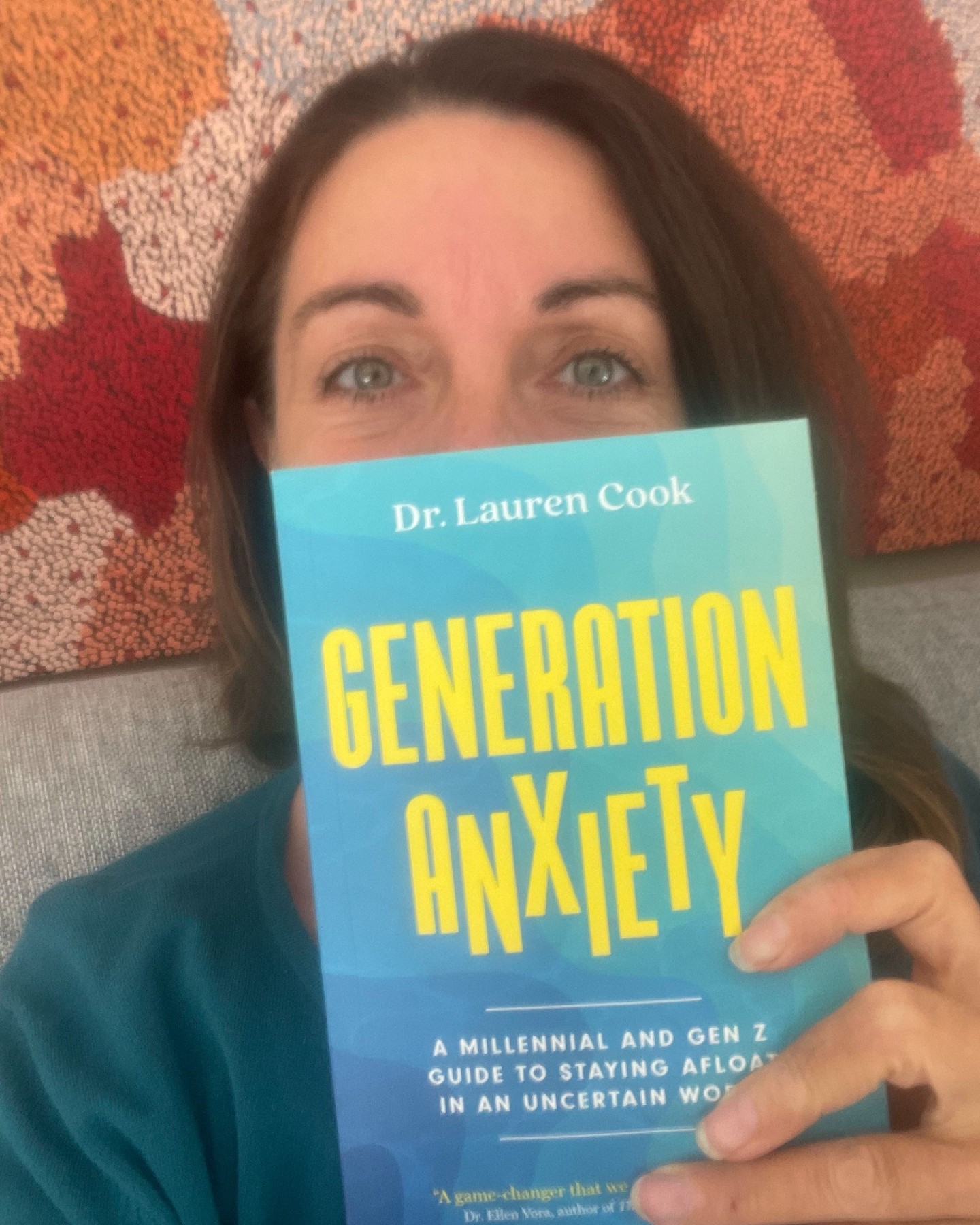 Born and bred in the UK, Lauren is an engrossing author and an earnest expectant mother. She has intriguingly chronicled her anxiety and fears about pregnancy alongside writing her compelling book titled “Generation Anxiety“. Lauren’s pregnancy journey, however, was quite peculiar due to her rare phobia known as a emetophobia, a deep-seated fear of vomit. Amidst all her apprehensions,
Lauren managed to have a remarkably healthy pregnancy, even while dealing with the unexpected twist of having a breech baby. Despite the statistics suggesting that only 1% to 3% of babies are breached, Lauren believes otherwise based on her personal trial. Her resolute perseverance and the ability to face adversity head-on are commendable, and she continues to share her anecdotal experiences, observations, and insights through her writings.
Episode Time Stamps
00:00 Guide for millennials and Gen Z in uncertain times.
05:07 Childhood trauma leads to lifelong vomit phobia.
07:29 Anticipatory anxiety often worse than actual reality.
11:31 Anxiety in young people and its impact.
15:37 Positive interactions with strangers benefit brain health.
16:37 Anxiety’s impact on planning a family.
21:34 French films are slower, reflecting cultural approach.
24:08 Encouraging personal responsibility for mental well-being.
29:45 Recognise abnormal worrying, seek help if needed.
32:53 Music is a powerful mood lifter.
34:57 Many new mothers turn to wine for relaxation.
37:38 Enjoyed David Permal’s calming, yoga-friendly mantras.
Episode Transcript
Alexia Leachman [00:00:05]:
You’re listening to the Head trash & Healing Show with me, Alexia Leachman, author of Clear your Head Trash and developer of Head Trash Clearance, a potent healing tool. That’S easy to use.
Alexia Leachman [00:00:14]:
Head trash is the home of healing. Where you can access self healing tools and resources to help you improve your mental fitness, emotional well being, and accelerate your spiritual growth. This podcast is where I like to share insights, stories and interviews to inspire you on your healing journey.
Alexia Leachman [00:00:30]:
And now for today’s show.
Alexia Leachman [00:00:34]:
Hello and welcome back to the Head Trash and Healing show. My name is Alexa Leachman. Thank you so much for joining me today. Now, today I’m going to be talking all about anxiety, and specifically anxiety for the millennial and Gen Z generation. I’ve got Dr. Lauren Cook who’s going to be joining me, and Dr. Lauren Cook has brought out a book not long ago called Generation Anxiety, a millennial and Gen Z guide to staying afloat in an uncertain world. Now, I’m not sure if you knew this, but the millennial and Gen Z generations are apparently two of the most anxious generations in history. And to be honest, that is not surprising when you consider how much is uncertain right now. I mean, the world has gone a little bit mad. So many things are unravelling and collapsing. We are really in the midst of a huge, huge shift in the way that we live and the way that we interact. There is technology that’s advancing at the rate of knots that’s threatening jobs. I mean, the financial situation is a little bit crazy.
Alexia Leachman [00:01:38]:
It’s crazy on all fronts.
Alexia Leachman [00:01:39]:
So it’s not surprising that those, that the younger generations are really struggling to find a footing in the world that it is. And so this is why I think.
Alexia Leachman [00:01:49]:
It’S really important for us to dive.
Alexia Leachman [00:01:50]:
Into a conversation like this. Because when we are surrounded by people that we’re anxious, it can really unsettle all of us. And we need to do whatever we can to support those around us. At least that’s my view. And of course, I’m always trying to come up with ideas and ways for you to reduce your anxiety. Now, one of the things that I love about this conversation that I have with Lauren is she is packed with tips and techniques and things to share to help you. There are some really good ones here.
Alexia Leachman [00:02:20]:
I’m not going to give anything away.
Alexia Leachman [00:02:21]:
Now, but I would definitely urge you to have your pen and paper handy because you might want to write some of these down. And you don’t have to be Gen Z or millennial to need to do that. We can all benefit from some of the tips that she’s going to be sharing. So let’s dive into that conversation that I had with Dr. Lauren Cook.
Alexia Leachman [00:02:39]:
Enjoy. Hello, Lauren, and welcome to the podcast.
Lauren [00:02:43]:
Oh, Lexi, it’s so good to be with you. Thanks for having me.
Alexia Leachman [00:02:47]:
That’s okay. We’re going to have such a great conversation. I know, because there are so many topics before we’ve recorded that I said, I really want to talk about this, and I want to talk about this. The main meat of the conversation, I think today is really going to be around anxiety and specifically around anxiety for Gen Z because that is a huge topic that I really want to dive into as they are thinking about planning, think about having a family. But you’ve just become a mum. Three month old. You’ve got a three month old. So let’s just talk very briefly about your own journey, becoming a mum and your pregnancy journey.
Alexia Leachman [00:03:18]:
Would you mind just sharing a little bit about that, Lauren?
Lauren [00:03:21]:
Oh, absolutely. Well, it was so funny writing this book, generation anxiety, kind of in a parallel timing with getting pregnant, being pregnant. I had so much anxiety around pregnancy and what that would all entail. When we were talking before we hit record, I’ve got a very fun phobia, a metaphobia, which is a phobia of vomit, which, as you can imagine with pregnancy, is like prime exposure. Right? Very anxious about that. But honestly, had a really nice, healthy pregnancy, ended up having a little breech baby. So I am convinced that breach babies are more common than the literature says. It says like 1% to 3% of babies are breached.
Lauren [00:04:01]:
But I don’t know, four out of ten mommies in my mommy and me class, we had breached babies, so ended up having a plan c section and really actually felt a lot of peace in that. In the end, it was still a very beautiful birth. How he came into this world. Now I’ve got a three month old, little Derek.
Alexia Leachman [00:04:19]:
So let’s just talk about the vomit phobia briefly, because I know this is a very, very common phobia. It’s not. Sometimes I see it stuck at the top of the charts in terms of one of the most common phobias. How did that manifest for you? Have you always had it?
Lauren [00:04:34]:
Yeah. I write about this in the book, and oftentimes people who have this phobia, they have some kind of trauma around vomit, but not always. It might be a really embarrassing experience they had where they got sick or someone got sick on them. That disgust piece in the brain is so powerful and that’s really what vomit is for. A lot of people. It feels pretty disgusting. My mom had breast cancer when I was two years old and was very sick. Of course, I don’t consciously remember any of this, but was throwing up a lot from chemotherapy.
Lauren [00:05:07]:
I was often physically removed from my house, I think to kind of try to protect me from seeing her so sick. But I think that really led me to internalise that vomit was out of control, was sickness, was potentially even life threatening and death. I’m really happy to say that my mom is healthy and well and I saw her yesterday and she’s loving being a grandma. I think seeing her, at least unconsciously, as a little child, that really led to some very deep trauma for me. And I’ve always had this phobia vomit ever since. And it’s been fascinating with the book coming out, because I write a lot about a metaphobia in the book. So many people have been coming out and saying that they too have this phobia.
Alexia Leachman [00:05:51]:
Did you heal this phobia or do you still have it today?
Lauren [00:05:54]:
It’s in between. And I say that’s true for all of anxiety. It’s rare that we ever make it go completely away. Will I ever be that person that’s out holding somebody’s hair back at a bar? Probably not. But I am able to withstand it where I was able to even get pregnant because my phobia was so bad. At one point, I felt like I would never be able to have kids because the idea of pregnancy and morning sickness scared me so bad, and kids throwing up, that scared me so bad. And if you don’t experience this phobia, I realised this can sound, like, ridiculous, like someone could be hearing this and being like, get over it. But phobias are so instinctual and there’s such a deep rooted fear.
Lauren [00:06:40]:
Logically, I could say, yeah, this is ridiculous, but on a biological level, I really felt endangered. So I did a lot of therapy, I did a lot of work to get to a place where I could be pregnant. I did, in fact, throw up during the pregnancy, only once, but I got through it. A lot of exposure and response prevention therapy was really helpful for me. And my son has even thrown up on me since he’s been born and I’ve been able to handle it. So I think that’s a big win.
Alexia Leachman [00:07:06]:
You are totally winning it. You are totally nailing motherhood. Brilliant. Brilliant. Let’s dive into anxiety, because obviously I would imagine that the fear of vomit, as well as any other anxieties that you had, would have really contributed to the anxiety. That you’re feeling any fears around birth and thinking about pregnancy, talk to me a little bit about how that anxiety was for you and how you manage that.
Lauren [00:07:29]:
Well, like, with all things with anxiety, we see the anticipatory anxiety is so much worse than the actual reality of it. The fear of what could happen was so much worse than what actually did happen. Right? Like, when I did actually throw up, I remember saying to myself while it was happening, literally a mantra out loud, I’m okay, I’m okay. And after the fact, I was like, that wasn’t fun, but my world didn’t end. I didn’t die. It’s the same thing with panic, right? People have panic attacks and they feel in the moment like they’re going to die, but no one has actually died of a panic attack. I try and remind myself of that and my clients of that, of like, the fear of what could be is often so much worse than the reality of what is. And I tried to really remember that during the pregnancy.
Lauren [00:08:18]:
Like, I’m strong, I’m capable, I can live with anxiety. My big thing is I don’t want anxiety to determine the outcome of my life. And if I didn’t have kids, knowing that, that’s a value that I’ve had for myself. If I didn’t make that choice, I knew it would have been because I was avoiding anxiety. And that’s what I didn’t want to happen. It’s fine if you don’t have kids for other reasons. Right? But I think it’s really important that we don’t let anxiety call the shots on our life.
Alexia Leachman [00:08:46]:
Yeah, I totally agree. And that’s exactly what I say in terms of fear. Don’t make that decision from a place of fear. Heal that so that you can make a decision about having kids from a place that. From a good place, from your heart, not from fear or anxiety. So I think that’s much. You can live with the decision like that in a way that you can’t. I think when it’s from anxiety or fear, it’s much more difficult as regret and guilt.
Alexia Leachman [00:09:07]:
Then it suddenly becomes worse. Right? It just kind of then becomes a situation that’s kind of difficult for people to live with long term.
Lauren [00:09:15]:
Oh, I was just going to say, like you mentioned, that regret piece, and that’s everything right there. We have to ask ourselves, when I end my life and I look back, will I have any regrets? And if the answer is yes, then we know that the anxiety is probably really getting in the way there.
Alexia Leachman [00:09:32]:
Yeah. And absolutely no I love that you picked that out. So your book is really about the generation z and how anxiety plays out for them. So I’m really interested in what does that look like and how is it different, maybe, to the anxiety that maybe different generations are experiencing? I mean, is it completely different? Is it just a shade different? I don’t know. I’d love for you to shed some light on that.
Lauren [00:09:57]:
Yeah, absolutely. And the book is written a millennial and a Gen Z guide, because we are really seeing that anxiety does look different for millennials and Gen Z. And I did a lot of research into why exactly that is. You look at something like the generational Power index and you ask people what has been defining generationally for you. Most generations, at least here in the United States, will tell you September 11 for us was like a Hallmark moment. But there’s been so many things since then. One thing after another, climate change, gun violence. I mean, the UK just came out and said that the US is an unsafe place to travel to, right? I mean, there’s just so much going on in our world with social media, the inundation of news, the war in Ukraine, you start to see people feeling helpless and hopeless.
Lauren [00:10:48]:
And when you put those two things together, it’s a recipe for feeling anxious and left unchecked. A recipe for feeling depressed over time. So that’s why I felt like, I’ve got to write this book right now, because we are seeing anxiety go through the roof for folks. And people are either having an avoidance reaction of, I just want to put my head in the sand and ignore everything because it’s too much, but then the problems continue, or they’re almost over preparing and they’re not able to live in the present moment of their life because they’re maybe engaging in all kinds of compulsive behaviours. My hope is that people, even given everything going on in the world, can still live life in alignment for them, even with that anxiety present.
Alexia Leachman [00:11:31]:
And so when they are experiencing the anxiety, how does that play out in someone that is quite young, really? I know that mental health doesn’t discriminate by age, but I’m just wondering when I think about maybe I think I was a really hot mess, actually, when I was young and I was probably wrestling with loads of anxiety and I didn’t realise it, okay, so maybe when I was that age, 1020 years ago, that we were all. Maybe I was just surrounded by loads of anxious people and I wasn’t able to tell. Maybe it really is quite a big, significantly different now. And there’s a larger proportion of people who are suffering from anxiety. And I think also because now we’re talking about mental health and now we’re okay to talk about our wounds and our parents, and we’re going in therapy. And now it’s kind of something that, where people are more willing to talk about, maybe we’re just more aware of that. I don’t know. But I’m just interested in how this anxiety piece looks among that generation and how it kind of plays out in the culture among them and their peers.
Lauren [00:12:32]:
Well, I think that’s a big part of the problem, is that we’re also seeing this loneliness epidemic happen, right. And I do think generationally that’s a big difference. You look at what was happening during World War II, right? A lot of people will say, well, that time, how were people not more anxious then than now? That was a horrible time in history. But people had more community back then. People knew who their neighbours were, they were closer with their families. Now people tend to really live in way more isolation. They don’t know who their neighbours are. They don’t say hi to the person at the grocery store.
Lauren [00:13:06]:
We don’t know who we can trust anymore. We’ve lost our ability to have meaningful relationships with people where we’re seeing social anxiety go through the roof, right? It’s kind of a joke. If a Gen Z gets a voicemail that it’s like prime ten, like anxious reaction, right? So we’re losing our social muscles. This happens. We naturally see anxiety go up because we feel isolated and scared in the world. Who do I have to turn to for support? Who can I share this with? Yes. I can pay a therapist and talk about it with them. That’s great.
Lauren [00:13:40]:
But there’s also a sadness, right, that maybe I can’t talk to my friend about it or my parent about it. People are spending so much more time on their phones than actual face to face connection. And our brains are literally starved neurologically for those deep connections. I think that’s a huge part of why these two generations, millennial and Gen Z, are more anxious than ever, because they’re doing this alone.
Alexia Leachman [00:14:05]:
And also now we’re hearing that AI is now going to be. We’re going to get therapists, AI therapists. And you just think, hang on a minute, this is not going in the right direction at all, because it’s that human connection that we crave, that we need as mums. Everybody listening to the show, I would imagine, is aware of this, but a baby needs to be held. If a baby is not held in its first few weeks, it will die. It needs that loving connection. That is a thing that we all humans need. Doesn’t stop when you stop being a baby.
Alexia Leachman [00:14:32]:
You continue to need that human connection. And so this kind of stuck to the phone, only engaging through an app, only messaging through apps, not meeting up. Even when they do meet up, they’re all on their phones together. I just had all my family around and they were just sitting in the same room, just on phones. You’re like, what are you doing? It’s really difficult. And then also I’m hearing colleagues and friends that are saying, when we have some young people starting, we’ve got to train them on how to answer a telephone. Which, again, reinforces that sense of this difficulty with social connection. So where’s the starting point?
Lauren [00:15:04]:
Well, we mentioned exposure and response therapy, and honestly, that’s the best treatment for something like this, is to actually practise this. I’m a big behaviourist. As a psychologist, it’s great to work on your mindset, but the brain has to behaviorally see that we’re capable of these things that make us uncomfortable. So, yes, leaving a voicemail on the phone. Right, or asking a friend out to dinner or lunch and having a rule, we’re not going to pull our phones out. Right. The more we can have that eye contact, that face to face, and even talking to a stranger. Right.
Lauren [00:15:37]:
I just read a study the other day that interacting with strangers is so good for our brain health. And actually, those interactions tend to go way better than we expect they will. But we just need to build more community. And if that’s even setting a goal of, like, today I’m going to smile at someone, or today I’m going to ask the grocer how they’re doing, even though that makes me feel like I’m going to crawl out of my skin. We start to have those corrective experiences to see, like, oh, either somebody was friendly back to me, or maybe it was a neutral interaction, but going to get into a fight with someone when we’re kind and nice to someone, right, we have to practise these things more. And I think older generations can be a part of that too, by really asking young adults like, hey, how’s it going? What’s going on for you today? Right. And really trying to help pull Gen Z and millennial out so that they’re engaging more, because we know that mentorships across generations is huge and that’s not really happening either.
Alexia Leachman [00:16:37]:
And so how does this anxiety then feed into those that may be thinking about planning a family or thinking about becoming parents, because you mentioned some things that are happening in society that are really kind of quite terrifying when you kind of spend too long thinking about them. And of course, we’ve all been through that collective traumatic experience that is Covid, whether it’s lockdown, the isolation that that brought on, but also that did, in some areas, foster some sense of community. I know in some areas in the UK of clapping at night and they got to know their neighbours and they were chatting of the fence and there was a little bit of community that started to kind of building up. Certainly where I was, we got to know our neighbours a lot more. So I think it’s a mixed bag. But in the most part, I think a lot of people felt the isolation, the disconnection from family, the fear of that whole situation that played out. But like you say, there’s the climate change narrative. That is, a lot of women that I’m in contact with are saying, well, I don’t know if it’s right that I should bring a child into the world.
Alexia Leachman [00:17:33]:
This is what’s making me think twice. Then you’ve got the community. We know that it takes a village to raise a family and there isn’t a village. So it’s hard work. People aren’t with their families anymore. They’ve moved away. So how does this anxiety in the work that you’ve done, how does that play out with those that are planning families or thinking about wanting a family?
Lauren [00:17:51]:
Well, and that’s spot on. We see right now that about 40% of young adults are saying, I don’t want to have kids because of the anxiety around things like climate change and things like that. And you hear of a lot of dinks, right? Double income, no kids. That’s kind of a name that we have here in the states for people who want to make that choice. I really come back to values here. What are your personal values? If a personal value is I want to bring someone into this world and teach them how to be a citizen that makes a difference, I want to help teach someone learn how to grow, then if that’s a value for you, how can we help you reason with the anxiety that comes from that? And I often will say values induction is not about pain reduction. A lot of times we want to make choices because we don’t want to feel pain, we don’t want to feel uncomfortable. There’s a lot of things about pregnancy, having a child that include pain, that include discomfort.
Lauren [00:18:49]:
And if we’re so set on just being comfortable all the time. Why would anyone have kids?
Alexia Leachman [00:18:54]:
Right?
Lauren [00:18:55]:
But are there things that come out of it that are so meaningful to you that you want to build this family that is going to hopefully help contribute to the world? Right. Make things better, then I think that’s something we have to be willing to sit with that discomfort because there’s so much good that comes out of it. I think that’s something that’s really important for us to hold in the conversation of all of this is not about reducing our pain, it’s about inducing the values there. It’s not an easy call, I totally want to acknowledge that, but at the same time, I think we need more people being a part of the solution than the problem.
Alexia Leachman [00:19:29]:
I think the avoidance of discomfort. I grew up with four phones. I’m giving away my age now, obviously, but I think now we’ve been very used to having immediate gratification, things being very easy. Smart app smartphones smart, they smart everywhere and really having this convenient. I’m going to order it now and if it’s not here by 08:00 tonight, then I’m not ordering from them. Know this idea, like, I’ve now moved to rural France, so if I order off Amazon, I’m lucky to get it within four days. So the idea of getting it later that day, which was my old reality, is, ah, so I’ve had a bit of a kind of wake up call on that, but the sense of community and actually, when there’s other things that are able to take hold and to be nurtured, which are meaningful connections and being within a natural environment, some of those things are really. I’m really recognising now how important they are for me.
Alexia Leachman [00:20:20]:
When I was disconnected from all of that, I kind of didn’t realise how much I was missing kind of thing, this convenience thing, we kind of. If it’s too hard work, I’m not going to go into town because that’s a pain. I’m going to have to park the car and I’ll stand in a queue and if I’ve got what I want, I’m going to go to another one. Oh, my goodness. All this drama, this hard work, it’s easy to do it with the we’re now kind of not even. Can’t even handle hard work or an effort. And so even things that take effort, that isn’t really difficult per se, it’s just time.
Lauren [00:20:51]:
It’s so true. And we have more free time than we ever have historically before, but it doesn’t feel like that to people. We don’t want to be uncomfortable. So that constant like go, go. That unwillingness to sit in any kind of inconvenience is definitely impacting our brain on a neurological level. And I would argue it’s even affecting things like diagnosis rates of ADHD. An amazing book stolen, focused by Johann Hari talks about as we’re seeing such a surge in social media and just this instantaneousness. Yes, we’re having difficulty concentrating, but it’s being diagnosed as ADHD.
Lauren [00:21:29]:
When could it actually be know our environment is just so overstimulating and so.
Alexia Leachman [00:21:34]:
Fast paced about an inability to stay with something a little bit longer. So some of the. I’ve moved to France now, so their approach to films, for example, is a lot slower. They’ll really kind of labour the point to where western Hollywood movies, that kind of thing, it’s like go, go. There’s no hanging about and they won’t allow that. Now working with 32nd, 22nd reels on Instagram, this kind of like TikTok generation where if it’s not funny, within 15 seconds, they’re onto the next one, then yes. Goodness. How can they sit and read a book or even kind of move past that period where something might feel uncomfortable to sit with the discomfort long enough to kind of make it through the point when you have a moment that might feel a little bit discomfort, uncomfortable at first, where those of us that maybe have been used to that, you kind of realise that that’s only last, the beginning of it.
Alexia Leachman [00:22:23]:
And then you sit with it and you kind of ride through that and then you’re like, oh, no, actually I’m okay. But if you can’t sit through that first bit, you shy away from it, be tight. And you never learn that actually you can handle discomfort. It’s fine. And actually, it’s nothing to be afraid of, actually, it makes you feel. That’s where you get your confidence from sometimes, is going through a lot of those uncomfortable experiences and knowing, hey, throw anything at me, I can deal with it. How can we teach people to kind of maybe live with discomfort, which I feel is maybe the early signs of anxiety developing. It’s the beginnings of it, potentially.
Alexia Leachman [00:22:53]:
What do you think?
Lauren [00:22:54]:
I think mindfulness is huge. I really do. We are losing this ability where I’ve even had clients, we’ll be a minute into a mindfulness session and they will interrupt and say, this is too hard. It feels really hard to just sit with ourselves. And mindfulness is not about feeling relaxed. It’s actually about learning how to just be in our bodies. So anything that kind of requires you to sit with it, whether it’s going to an exercise class, right, where socially it might be kind of weird if 20 minutes in you just walk out of the yoga studio, but where there’s some social scripts of like, okay, I got to hang in there with this. That’s teaching us how to really sustain our attention and stay with, and in turn learn how to sit with discomfort.
Lauren [00:23:37]:
We’ve got to practise that even a little bit of a silly exercise, but a good way to harness this a little bit. Let’s say you have an itch on your face and you really want to scratch your nose. A lot of times we’ll just do it right away. Right, but mindfulness would be okay. Can I sit with that discomfort of like, oh, I really want to itch my nose, but can I hold this? And that’s just a simple exercise that kind of elucidates the example of this, of learning how to sit in that discomfort and seeing that we can handle it.
Alexia Leachman [00:24:08]:
And so what other things can they do? Because it sounds to me like really maybe to help this generation maybe better cope is these little exercises like the one you’ve just shown us now, that’s very simple and really easy to do. I know I’ve done that loads in just in meetings at work where you’re like, oh, no, is it really something? Are we really asking them, saying to them, you’ve got to kind of take this on. This is for you to own and to kind of figure out and fix yourself? That feels like a really mean thing to say. But also you have got to take responsibility for your own mental health, your own emotional well being, and notice when things are starting to unravel and take action. At one end, it’s me sounding super mean, like, well, you got to own your stuff and crack on and sort it out, which obviously isn’t very empathetic and helpful, but also there’s a part of that where you do need to just kind of throw a pair and just find the help. Go and find the resources, go and find the therapist, go and find the support, make some for, like, go and do the things. Where do you sit on that? Do I sound super mean here or is it.
Lauren [00:25:15]:
I really like this idea. I write about this in the book a lot called empowered acceptance. And it’s really taking this both and approach. Like we have to accept and acknowledge the realities of this world, that life is really hard and scary. It’s not about gaslighting ourselves and saying, like, it’s not that bad. No, sometimes it is that bad. And it does really feel hard accepting that, not avoiding that and being empowered too. Still taking action.
Lauren [00:25:41]:
Action, right. Acceptance is not about apathy and just throwing our hands up and saying, well, I guess we’re all screwed, right? It’s saying, no, what can I do in my own life to take action? And what can I do to be a part of the solution with climate change, for example, versus just standing on the sidelines, shaking my boots kind of thing? We have to be a part of the solution in that sense. On an individual level. I’m a huge advocate for holistic healing. Obviously, I’m a therapist, I’m a big fan of therapy. But I really think we’ve got to look at so many forms of healing, whether it’s acupuncture, whether it’s nutrition and the food we put into our body. I mean, the research on the gut brain connection and how that impacts anxiety with the foods we’re eating, that’s something that we can take action with. So it’s really looking at a lot of different avenues and seeing what works well for each individual person and putting in the time to do that, that’s well worth the effort instead of just checking the boxes on all the other things on our to do list.
Alexia Leachman [00:26:45]:
I think one of the holistic healing points are really important. I think, and I think when for some people going in, the way I see it is like sometimes your mental health or emotional wellbeing, let’s call that, that’s maybe the most pressing challenge that you’re facing. And so you could go in through the front door and deal with that head on, or you can maybe sneak in through the garden and maybe just do some exercise and maybe start running or doing something that’s going to build your physical strength, the nutrition, another back garden route where you can start doing things from the edges and then that builds up your overall health in other ways that then can give you the strength to then think, actually, I think I can tackle the front door now. Whereas without those things, maybe you kind of felt that was a bit too much. Whereas if you could take the back door, you can still help the emotional well being through your nutrition, through the exercise, but it’s just doing it in a slightly roundabout way that’s still helpful.
Lauren [00:27:39]:
I love that metaphor. That was so cool. I’m going to use that with clients. That’s beautiful.
Alexia Leachman [00:27:45]:
Yeah. I think that can really help whether they haven’t got the emotional strength, because I think tackling anxiety does require you with the work I do around getting. Helping people to get rid of their phobias. With my approach, you have to eyeball the phobia, I have to eyeball the fear. And that takes a lot of guts, though, to do that. A lot of people can’t. That’s too difficult for them to do it because of maybe the trauma or whatever they’ve gone through. And so to help those people still bring about a transformation, maybe the gentle approach is what works best for them because they can take it easier.
Alexia Leachman [00:28:16]:
Bite. And this is where I use the back, but the garden approach, where you build up strength in other ways so that you can then come back to the phobia and then deal with that once you’ve got more emotional strength within you, to be able to deal with that totally well.
Lauren [00:28:28]:
And I always love to have an anxiety hierarchy with clients and myself of where am I at in terms of how anxiety, smoking. This is for me, I always say, and the research shows the sweet spot is like a four to six. So if you’re like, at a four to six range in terms of a scale of one to ten, that tells us, like, okay, this is a good challenge, let’s go for it. But if it’s like a seven to ten for you of, like, this is going to be too much for me to face this right now. We’ve got to honour that, right? It’s not always just about pushing through, because sometimes that can retraumatize or make the anxiety worse for someone, actually.
Alexia Leachman [00:29:04]:
And what about for those that maybe are struggling with maybe kids, new kids, newborns, dealing with this kind of anxiety, the existential anxiety?
Lauren [00:29:12]:
I think around kids, I really feel that, like, a new anxiety for the first time of, like, what happens if something happens to my spouse or something like that. Right. It can trigger all kinds of anxieties. I like to use what’s called the four DS. This is from one of my best professors, Dr. Henderson. So this is helpful for parents listening some cues that maybe the anxiety is next level and might benefit from some help is if you’re noticing any kind of distress where you yourself are like, I’m worried about how worried I am. This doesn’t seem like my normal pace.
Lauren [00:29:45]:
And if there’s deviance from your norm, right. If you’re noticing this isn’t normal for me, or when I’m looking at my peer group and other parents, I’m not hearing them endorse the same level of worrying or checking behaviour. They’re not checking their infants multiple times in the night to see if they’re breathing. Okay, what could be going on there? There’s any kind of dysfunction if you’re not able to keep up with the things in your life, if you’re not able to go to the paediatrician appointment or maybe go to your exercise routine. Right. Because you feel like, I can’t keep up with my life. And lastly, if there’s any kind of danger, and we have to normalise this last point, if you yourself are feeling unsafe, if you’re having thoughts of, I just wish I wasn’t alive for this right now, or if I could just go to sleep and never wake up, or if you’re feeling danger towards others, those are all signs that it would be good to get some support for those symptoms. And we got to normalise all of that because postpartum anxiety is actually more common than postpartum depression.
Alexia Leachman [00:30:46]:
I think prenatal anxiety isn’t talked about enough as well because prenatal anxiety is huge and we hear a lot about postpartum depression, so we hear a lot about that. But I think those women that suffer extreme anxiety the minute they find out they’re pregnant, a lot of those women possibly have tokophobia and they don’t realise that tokophobia is a thing. No awareness of that. So they’re wrestling with these feelings that they literally don’t understand. And I know that I’ve got clients that suddenly their anxiety just goes off the chart the minute they’re pregnant, the minute baby comes out, everything’s back to normal again. That the carrying of a baby in their body is kind of the stuff that really just explodes the anxiety for them. Just talk a little bit about some prenatal anxiety with the work that you do.
Lauren [00:31:26]:
And I’m so glad that you bring that up because it definitely is not talked about enough. And a lot of times people do get surprised by that experience. What’s hard is that in any other situation, pretty much you are consenting to the exposure. Right? Like when I was doing my exposure therapy for a metaphobia, I am choosing to look at pictures of videos of people vomiting. When you’re pregnant, you’re not necessarily choosing whether or not you want to have that exposure. It is happening to you. I remember being pregnant and saying, it’s like I’ve gotten on a roller coaster and I can’t get off the ride. And that almost can really have feelings of claustrophobia for people, right? That sense of entrapment.
Lauren [00:32:04]:
So that’s where that mindfulness piece is really key of the distress tolerance of, like, I’m feeling uncomfortable in my body right now, and that’s okay. It’s not fun, but let me sit through this and sit in this and bring in support, too, whether it’s your partner or someone else in your life. There’d be so many times where I would voice to my partner, I’m feeling kind of panicky right now. Can you sit by me? And I’d like to hold your hand kind of thing. Right. And music is huge. I think music can really help us get in another headspace. When my son was born, I had a whole birth playlist, and that really affected my mood.
Lauren [00:32:44]:
So lean into music or whatever engages you from a senses standpoint, and that can help you, too, when we’re starting to really get in our head with the anxiety. Yeah.
Alexia Leachman [00:32:53]:
Music is a game changer. Actually, I’m glad you mentioned it because it’s so simple and it’s something that we all have access to, readily knowing which tunes can really lift you. I’ve got some go to tunes that always, always get me going. And that, you know, like, knowing what music that having all of that maybe stored on your phone or make yourself a Spotify playlist where you’ve got them to hand really easily. I think it’s creating these little shortcuts so that when you are in a state like that, you can reach for stuff easily. And the one thing that I notice is that when I’m not in a good place, I’ve got loads of tools and things that I use, but when I’m not in a good place, I forget all of them. You’re in that state and you’re like, after something like, oh, my God, I could have done this, and I could have done this. And I’m like, why can I not do any of that? And I feel like I need to have a great big notice up.
Alexia Leachman [00:33:38]:
So it’s saying, like, if you’re feeling crap today, do go through this list. I’m just thinking of there any little really easy go to, like, the music one you just shared.
Lauren [00:33:48]:
We love to help people create, like, a self care kit, and it engages all the senses. So what’s something you can touch, whether it’s like a little fabric or something that feels nice for you, what’s something you can smell? Aromatherapy is huge, and peppermint is especially a good one for anxiety and helps with nausea, too. What can you hear? Whether it’s sound with music or a sound machine is really helpful. I love listening to mindfulness. Guided mindfulness with the calm app. And I believe maybe you’ll know better than I, but there’s a hypnobirthing app that got me through my pregnancy, so everybody should download. I want to say it’s called calm birth. That is so, so good.
Lauren [00:34:29]:
And then your other senses. What am I forgetting? A sight. What is something visually that’s great for you? Whether it’s a picture of your family that you have in this box or maybe a quote that you like to read. Taste. Whether it’s a peppermint candy, piece of gum, sour candy helps with anxiety. So have it all in a little box, your self care, soothing box. And that can be some nice things to turn to.
Alexia Leachman [00:34:51]:
Yeah, but maybe not the bottle of wine for your taste, because that might.
Lauren [00:34:54]:
Not be a good.
Alexia Leachman [00:34:57]:
I know a lot of new mothers do turn to that. I joke. But actually the glass of wine is. And also drinking is such a. Certainly within british culture, it’s such an accepted. If you suddenly announce that you’re not drinking anymore, you’ve got to deal with a lot of kind of friction from people going, what are you doing? Why? Look at you not being fun anymore. This kind of, like, there’s a lot of culture around drinking, but also when you have that, there’s an association, a very powerful association, that when you take that first sip of wine, it just feels like you’re. And when you’ve had kids screaming around all day, there is a huge thing with mums getting together, having wine, and then before they know it, they’re drinking wine every night and maybe husband’s away or he’s working late and they’re drinking half a bottle a night, maybe a bottle a night.
Alexia Leachman [00:35:44]:
And it can kind of escalate very rapidly, I think, with dealing with that numeral anxiety and the stress of navigating that journey. I don’t know, do you want to talk to that?
Lauren [00:35:55]:
No doubt about it. That is so true. And one thing that I think can be helpful in terms of deciding whether or not to drink, we see that alcohol is really inflammatory and really contributes to the increase of anxiety. If you even start to test it out of, like, how do I feel the next day after I drink? A lot of people will tell you, I actually noticed a spike up in my anxiety. It creates this negative feedback loop. And the other piece, too is we know that alcohol affects not just the first night of sleep, but the second night of sleep. And if you’re drinking every other day, your sleep cycle is never getting a chance to recalibrate and sleep is a huge part of anxiety and depression as well. That to me is like, enough of a buy in of like, oh, yes.
Lauren [00:36:43]:
I don’t want that increase in anxiety any more than is already happening in my body. And if alcohol is something I can do to reduce fat by cutting back on the inflammation, then that’s something that I think can be good. And it’s nice to see. I’m seeing a lot more, like, mocktail culture of more fun drinks that don’t have to have the alcohol in it. So we’re still getting the culture and community of drinking something together, but it not having to have alcohol in it. Yeah.
Alexia Leachman [00:37:11]:
So, yeah, cutting back on alcohol is another little thing you can do to start reducing the anxiety that you’re feeling.
Lauren [00:37:17]:
Yes.
Alexia Leachman [00:37:18]:
I love that. I’m just going to recap. What I’ve remembered is you’ve got your self care kit, you’ve got your trying to sit through the discomfort moments, like the itchy nose thing. That was a really good one. Also choosing some tracks or things that you can sit, like meditation, like mindfulness tracks. Whatever’s going to work for you, do it for you. While we’re on tracks. I really like mantras.
Alexia Leachman [00:37:38]:
I really got into an artist called David Permal, and she’s got some really wonderful mantras. They’re often played at yoga classes. She’s got that kind of music going on. But just sitting with some of these, I found that because there was a vocal that I could hang on to and maybe learn, but because it was Sanskrit, I never really knew what they were saying. But it was a really useful hook for my mind to just kind of follow it. And I found those very calming. And then what else have you mentioned? Self care kit.
Lauren [00:38:01]:
I think that covers it. Well, maybe give acupuncture a try. But, yeah, nutrition is really big for people. And you mentioned, know, there was a study that just came out of Australia that they found that exercise was more effective than therapy and psychiatric medication. So not great for my field. Obviously, therapy is helpful, but exercise is huge. So I always think that’s a really good entry point for folks. If you can get out for a 20 minutes walk, we see changes in the brain, even just at that level.
Lauren [00:38:34]:
So it’s absolutely worth it.
Alexia Leachman [00:38:35]:
Brilliant. Well, Lauren, thank you so much for sharing all your expertise on anxiety. Now, if people want to find out more about you, your book, where can they track you down? And also your socials. I mean, you’re prolific on lots of platforms, so tell us where we can find you.
Lauren [00:38:49]:
Well, generation anxiety comes up September 19 is the official day. I’m so excited because we have a special publisher with Watkins that’s doing specifically UK and the whole commonwealth. Get on Amazon or wherever you like to buy your books. You can follow along on Instagram and TikTok. I love doing a good mental health meme and then I speak internationally with teams. So if your company really wants to bring this conversation about anxiety, please join us. I would love to be a part of that conversation with your group.
Alexia Leachman [00:39:21]:
You’ve just been listening to me Alexia here on the headtrust show. If you’d like to join me on your self healing journey, then let me invite you to join my clearance club. This is my self healing community and membership where I provide you with everything you need to clear your head and heal your wounds. And every month we come together for support on the group call to find out more. Head over to clearyourheadtrash.com club. Until next time. Bye for now.

- How to Stop Anxiety (Without Medication or Mindfulness) - February 23, 2026
- You’ve Been in Therapy for Years. Why Do You Still Feel Broken? - February 19, 2026
- What’s Hidden in Your Car Boot? - February 14, 2026